Godmotherhood
The GodmotherGodmotherhood is a relationship Rachel Elliot initially inhabits more as a formal connection than a sustained practice. As she becomes more attentive to Jessica, Charlotte, and Leo, the role acquires concrete duties—time, childcare, and attention—and a private emotional significance. It gives Rachel a way to participate in children’s lives while her hopes of having a child of her own are unsettled, and gradually helps her recognize forms of attachment she had overlooked.
The role and its early distance
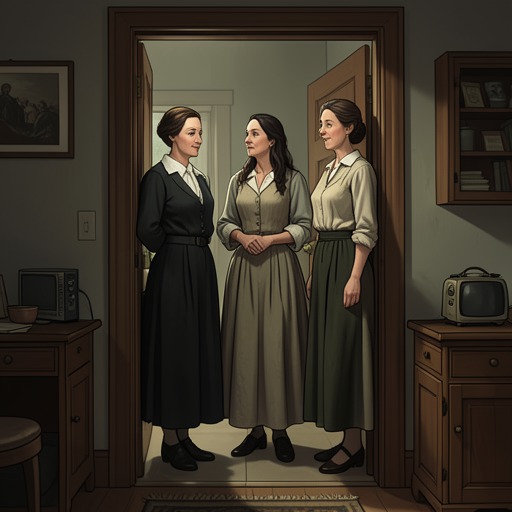
Rachel is Charlotte’s godmother, and Naomi Fullerton’s daughter Jessica is also Rachel’s goddaughter. Leo, the son of Rachel’s friend Joy Dalton, is her godson. These ties connect Rachel to children whose parents face very different circumstances: Anita Cavanagh is absorbed in caring for Charlotte and the twins, while Naomi arrives in London amid the collapse of her marriage and asks Rachel for help with Jessica. The role can therefore mean more than ceremonial kinship. It gives Rachel a place within these families, but the extent to which she acts on that connection varies.
For years, Rachel has been insufficiently involved with her godchildren. She recognizes this only after spending time with Jessica: the pleasure of their outing surprises her, and she thinks with regret about how little she knows the children and how ungrateful she has been. That recognition is not presented as a sudden transformation into a parent. Rather, it marks the difference between possessing a relationship in name and making time for it. The contrast matters especially because Rachel’s work has long occupied much of her attention, while the parents around her negotiate the demands of childcare alongside employment and other pressures.
Jessica and the first practical commitment
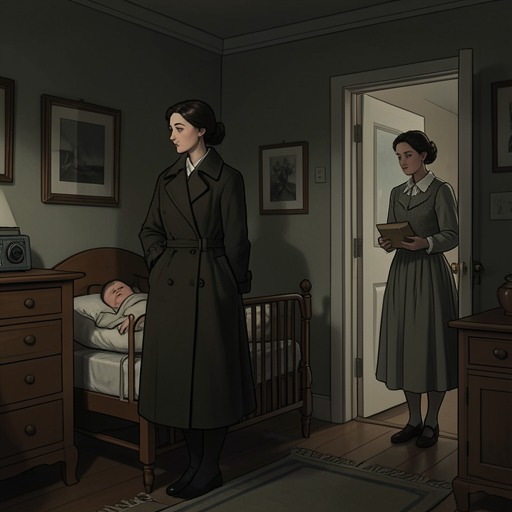
Naomi’s visit makes Rachel’s responsibility immediate. After revealing that Graham wants a divorce and explaining that she and the children have left Suffolk, Naomi says she must meet a lawyer and asks Rachel to look after Jessica for a couple of hours. Rachel accepts. Jessica, seven years old, appears solemn and wary, holding on to her mother’s dress; Naomi reassures her that Rachel will care for her while she is away. The request is brief, but it turns godmotherhood into direct, ordinary care at a moment when Naomi needs to handle an adult crisis without her daughter beside her.
Rachel’s time with Jessica develops into an unexpectedly enjoyable outing. They return to the office muddy and late, and Rachel has to make excuses to Naomi; Melissa laughs at the state of Rachel’s expensive leather shoes and offers a damp cloth for her trousers. The disarray is a small but telling departure from Rachel’s carefully managed working life. Instead of treating the outing as an inconvenience, Rachel remembers it as one of the good things to emerge from a difficult period. Her pleasure prompts her to reconsider her relationships with all her godchildren, not just Jessica.
Reaching back to Joy and offering care
That reconsideration leads Rachel to write to Joy, acknowledging that months have passed since Joy’s letter and that she has done little beyond sending a Christmas card. Her reply is both apologetic and practical: she offers to contribute to Joy’s household supplies and asks for a list, while also asking after the work on Joy’s house following bad weather. The letter shows Rachel trying to restore a neglected friendship through specific acts of attention rather than sentiment alone.
Rachel also proposes that Joy bring Leo to visit and leave him with her, so that she can get to know him better. She does not claim unlimited confidence or promise extended childcare; she admits that she may not manage for days at a time. The modesty of the offer makes its intention clearer: she wants an actual relationship with her godson, not merely relief from guilt about failing to maintain one. In the same letter she shares major changes in her own life, including her possible future with Robbie Dexter and her plan to leave MC for a new agency. Her invitation to Joy belongs to a period when Rachel is reconsidering both her private life and the attention she gives to others.
She makes a similarly bounded offer to Anita. Hearing that Anita’s writing work has increased but that childcare remains a problem, Rachel asks whether she could help. She is careful to distinguish Charlotte from the twins, saying she is not sure she can manage the twins but would like to see more of Charlotte. She postpones the offer until she has settled into a routine between Devon and London and started her new job. This qualification acknowledges the limits of her availability, while the offer itself marks a change: Rachel is beginning to treat godmotherhood as time she can actively give.
Leo and a changed understanding of motherhood
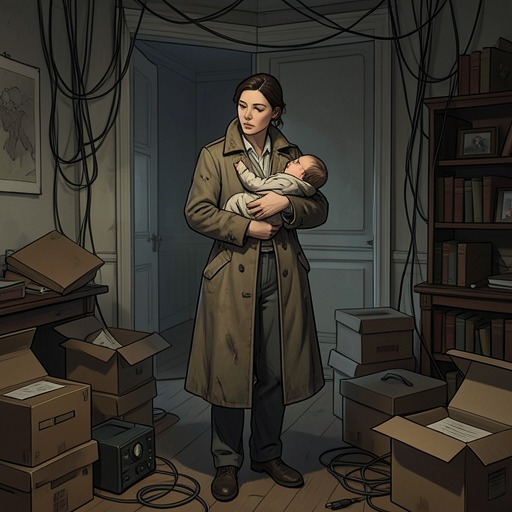
Rachel’s care for Leo brings the role into its most intimate everyday form. During Joy’s short visit from France, Rachel is left alone with her fourteen-month-old godson for a couple of hours. Joy has supplied detailed instructions about bottles and naps, but Rachel’s attention is initially divided by concern about the cat. Leo approaches objects with exuberant force, and Rachel fears for the animal; when she separates them, Leo cries, and the cat appears unhappy too. She lets them back together and watches the cat avoid Leo when it has had enough. Rachel’s experience is not effortless, but it requires her to respond to the child and adapt rather than simply follow a plan.
When Leo drags a book toward her, Rachel lifts him onto her lap. The book makes animal noises: together they press the buttons that make a cow moo and a mouse squeak. Leo settles against her, and Rachel, absorbed in the moment, forgets the clock and Joy’s notes. Remembering how she once cradled him as a baby and felt a sharp longing afterward, she realizes that the longing has receded. She thinks of her four godchildren as a close-knit group who had been present in her life all along, and understands the pleasure of this relationship as companionship without the full burden of parenting.
That insight does not erase the seriousness of Rachel’s earlier desire for a child. After the weekend with Robbie falters, she considers accepting that there may be no rural future and no baby, and imagines one day releasing herself from the cycle of hope and apprehension. Godmotherhood offers a real connection with children, but the narrative keeps it distinct from motherhood rather than presenting it as a simple substitute. Its significance lies in how Rachel learns to receive and return affection within relationships she already has.
A more attentive godmother
Rachel’s renewed involvement also becomes visible to others. After a meal with Anita and Charlotte, Rachel offers to take Charlotte to see the goblins. Anita watches them leave and notices that Rachel has become a more relaxed and attentive godmother. She wonders whether this change is connected to Rachel’s thwarted hopes of becoming a mother, but recognizes that the question may be too private to ask. The scene preserves a tension at the heart of the role: Rachel’s care is genuine, yet its emotional origins are not fully knowable even to a longtime friend.
Across these relationships, godmotherhood develops from an underused title into chosen participation. Rachel offers limited childcare, repairs contact with Joy, spends unplanned time with Jessica, and discovers an ease with Leo that surprises her. The role does not settle every uncertainty about career, partnership, or motherhood. It does, however, make visible a form of family intimacy that Rachel had failed to notice, and allows her to become more present to children who were already connected to her.